 No amount of professional smiles could hide the terror I saw in my fellow public speakers, or felt in myself, when Sylvie di Giusto announced just what was coming next. We would spend the next 5 minutes walking around the room with a sheet of white sticky labels in one hand and a pen in the other, and purposely pass snap judgments on one another.
Sylvie had already done an expert job of explaining that first impressions are made in only 7 seconds and it was our turn to share our first impressions of our colleagues. As we approached someone, we quickly wrote the first word that came to our mind when we saw that person, peeled off the label, and placed it on their back, saving a measure of “face” for everyone involved. In 5 short minutes, we were left with a handful of literal and figurative “labels” to categorize and make sense of, and to ponder the sort of first impression we make on those we interact with each day. As nervous as we all were when we the assignment was first given, the exercise was relatively painless because, as Sylvie said, most of us lied. In other words, we are generally nice people and we chose the nice things we could say about the other person. The judgments made in the real world, however, are not so concerned with preserving social capital, and I couldn’t help but wonder what the unvarnished truth would look like for me. For me, one of the most telling parts of this experience was what raced through my own mind when I first realized what the nature of the exercise would be. “Will they see how insecure I feel today? This outfit makes me look frumpy. Will this be the moment they wonder how they ever let me in this amazing group?” Though fleeting, the thoughts were there and as I thought about them in the quiet moments since that evening, I have come to an eye-opening realization. As much as we wish to be “labeled” by others in positive ways, the labels we place on ourselves have a powerful effect on the way we present ourselves to others, and thus, have a strong effect on the labels others subsequently place upon us. When we label ourselves as “incompetent”, “over our heads” or “less than”, we create an emotional vibration that is hard to hide. That emotion may affect how we dress, how we carry ourselves, or whether we are able to be completely present when someone is speaking to us, rather than wondering if this skirt really was the right choice. Labeling is a game our brains are all wired to play…like it or not. But that doesn’t mean that a label cannot be changed. When a first impression is less than positive, Confirmation Bias, or the tendency for our brains to search for evidence that our initial impressions were correct, works against us. Not only do we seek to prove ourselves right, but we actually ignore signs that we may be wrong. This can be overcome only with a highly conscious effort to seek out the things we may be missing. The same is true when we try to change our own labels we have placed on ourselves. Do you fear you are incompetent? Spend time actively looking for the ways that you are competent. Are you really over your head? Or can you find examples in your past where you have taken on new challenges and come out on top? Feeling less than? Start giving yourself credit for the unique ways in which you contribute to the world. If you really feel you must label yourself, try on this label for size: You are unique, and talented. You have a gift to share that will make the world a better place to be. No one has your exact experiences or perspectives. No one has learned the same things you have learned in the way you have learned them. The world needs you. You are a divine creation of God. And that is the greatest label of all.
0 Comments
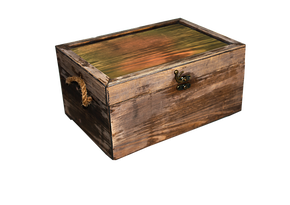 “A beggar had been sitting by the side of a road for over thirty years. One day a stranger walked by. “Spare some change?” mumbled the beggar, mechanically holding out his old baseball cap. “I have nothing to give you,” said the stranger. Then he asked: “What’s that you are sitting on?” “Nothing,” replied the beggar. “Just an old box. I have been sitting on it for as long as I can remember.” “Ever looked inside?” asked the stranger. “No,” said the beggar. “What’s the point? There’s nothing in there.” “Have a look inside,” insisted the stranger. The beggar managed to pry open the lid. With astonishment, disbelief, and elation, he saw that the box was filled with gold.” (Excerpt from Eckhart Tolle's The Power of Now)
It is fairly safe to say that at some point in your life, you have felt empty inside…as if there was nothing of value there. We have all been there. Some of us have wallowed there like hopeless beggars for far too much of our lives. Today, I share Eckhart Tolle’s parable to help you see that you have been valuable all along. You have had the answers inside of you all along. You are resourced to accomplished your wildest, most passionate dreams, long before you knew you had them. That is the job of a good coach. The best coach cannot choose your path, but they can help you discern it. The most experienced coach cannot give you their confidence, they must teach you how to develop it. The greatest of coaches cannot give you what you are looking for…they can only help you discover it within yourself. The answers lie within you…today…this very hour. You have only to have enough faith to look inside the box.  By the end of May we will have married off 3 beautiful daughters. Each looked like princesses in their beautiful gowns, but the end result came after a lot of work, and frankly, a few tears. Multiple shopping trips, followed by endless tailoring appointments, got us closer and closer to creating the fairytale image they were seeking. In one desperate attempt to create the perfect fit, I wound up buying $900 (yes, you read that right) NINE HUNDRED DOLLARS worth of form-fitting shapers to achieve the perfect fit desired, breathing room being a luxury at this point. (Shout out to Kohl’s for their amazing return policy!)
Having “dress #3” ready to go, I breathed a sigh of relief and could not help but think about how this experience applies so accurately to the rest of our lives. The world tells us what we should look like, act like, walk and talk like. It tells us when it thinks we are too short, tall, round, or thin. And all the while, we often find ourselves doing whatever it takes to mold ourselves into what others want us to be. What if we allowed ourselves to simple be? What if we let our clothing fit us, rather than the other way around? What if we just embraced our way of walking and talking? Our height and breadth? What if we realized that believing we are “good enough” today does not prohibit us from being better tomorrow? What if we stopped judging others and started loving them where they are…how they are…today…while still giving them breathing room to do, have, or be more tomorrow? What if we realized that fairytales are simply that, and that life is lived by real, genuine, slightly broken, good-enough people, and that we are one of them? So, put on your proverbial sweat pants, throw on your comfy shoes, and take a load off…off of your heart and mind, and realize that today, you can just be.  John was an awkward kid in my college psychology class. I felt bad for him and decided to say “hi” every day as I entered the room. Little did I know that one simple act would convince John that I was “the one” for him. He began buying me presents, sending anonymous flowers with invitations to join “my secret admirer” at darkened restaurants, and I did not know how to get rid of him. He scared me. When he stared me down for 4 hours at a reunion, I actually changed my phone number and installed a security system. I’m afraid that Jim never learned what a healthy relationship really is.
I used to think I loved food too much, seeing how I couldn’t stop obsessing about it, wanting it, eating it, or at a bare minimum, thinking about it. In reality, my former relationship with food was anything but love. It was less An Affair to Remember and more like Fatal Attraction. Real love is nurturing, kind, selfless and healthy. What I felt for food was destructive, consuming, and wavered between obsession and hatred. For many years, I was seldom hungry and often full. That didn’t always stop my need to keep eating. You see, I was always full, but I never satisfied. What does it mean to be satisfied? Merriam-Webster tells us it means to be “pleased or content with what has been experienced or received.” When I binged on food, I was never satisfied. As the old saying goes, “one was too many and a thousands was never enough.” The minute I started, I could not stop until it was physically impossible to eat any more. Mentally, the beating never stopped. Needless to say, I was very surprised to learn that satisfaction was such an important part of the process of developing a healthy relationship with food. So what does it take to be “pleased or content” with what our body actually needs? First, we have to be eating for the right reasons. No amount of food (or alcohol, or drugs, or overworking, etc.) will ever calm a troubled heart or mind. It can distract, but it will never bring peace. No amount of food can solve a problem, unless that problem is hunger. Second, in order to find satisfaction with our eating experiences, we must become committed to honoring the God-given signals of our bodies: hunger and fullness. Getting overly hungry or overly full are both equally miserable. But there is a healthy range of hunger and fullness, and finding that range more consistently brings more satisfaction. Third, choosing food we love is critical to our satisfaction levels. If you don’t love it, don’t eat it. If you eat it, savor it! Fourth, our bodies love a large variety of foods. When we take our cues purely from our minds, we convince ourselves that what we really want are endless supplies of ice cream, cakes or cookies. When we learn to really listen to and honor our bodies, we soon discover that our bodies are crying out for a large variety of foods. Study after study shows that when we eat the same things over and over, our satisfaction goes down. Learning to find satisfaction is one of the great joys of learning to be an intuitive eater. In fact, it is one of the great joys of life. The first time I realized I didn’t want to finish my dessert was nothing short of miraculous. I had finally experienced for myself what it means to actually be satisfied with food. Now, when I’m faced with the choice of being full or satisfied, I realize that it’s like the choice between an obsessive relationship, with its illusions of happiness and connection, verses the quiet, calm, steady, secure relationship of true love. It took a long time to recognize it…to value it…and to realize that I deserved it, but now I know that being full can never hold a candle to the experience of being satisfied.  I remember as a child wondering if we could eat in Heaven. If we couldn’t, I had no interest in going. After all, I didn’t want to leave my best friend behind.
The more I progress through Intuitive Eating, the more I understand the role that emotions have come to play in my relationship with food. Whether I was filling an empty soul when I came home to an empty house after school each day, numbing the fear that I might truly be worthless, or filling the hours of boredom with something “exciting”, food was always there as my constant companion…my best friend. The problem was, I didn’t know my friend was killing me. It was killing me emotionally and spiritually. It was trapping me in am emotional quicksand where every move convinced me more and more that there was something “wrong” with me…that I was worthless, powerless, and would never, ever be good enough. My “friend” turned out to be not such a great friend after all. I remember being in the 5th grade and coming home from my friend Christy’s house. My mom seemed particularly irritating, and before long she gave me “lecture #4” about how I wasn’t such a nice person when I came home from Melanie’s house (names have been changed to protect the guilty. Mom didn’t think Christy was a very good friend and started making her list of suggestions for who she thought my friends “should” be. I didn’t want to admit she was right…but she was. Melanie later walked down a dark path and I was grateful that I had heeded my mom’s advise. How did I do that? I started to replace the time I spent with Melanie with other people who made me feel better about myself when I was with them. Before long, my mom could stand me again as I was back to being more respectful at home. Replacing food as my “friend” has been pretty much the same process. I have chosen to spend less time with food and more time dealing with my emotions; less time with food and more time working towards my dreams; less time with food and more time working on my relationships. In short, I have found other activities and beliefs to replace the old, and sure enough, over time, I have come to feel better about myself when I’m with them. I can now say I’ve made peace with food, and it has once again become my friend. This time it is a true friend…one that is focused on giving my life pleasure, health, energy, and peace; a friend that leaves me with no regrets when I have spent time with it. I am more kind and loving to the people in my life, and more kind and loving to myself. I’m so grateful for the process of learning how to truly choose better friends.

How many of us feel like we are “being changed”? Being changedmight feel like a very bad thing. Sometimes we wonder, “Why can’t people just love and accept me for who I am?” But what if deep inside, we knowthat we needto change. And despite our tough exteriors, we might even wantto change. We want to do, have, or be more, but we’re terrified of what kind of pain might be involved in that long, challenging process. And if we’re being absolutely honest with ourselves, many of us gave up long ago believing that change is even possible for us, so why even bother?
Whether change happens voluntarily or involuntarily, when we embrace the process of change, we become more resilient. As I teach my clients, the pain we’ve been trying to avoid can actually be the path to peace. Rather than being something we fear, change can be an exciting journey to letting go of the old patterns in our lives that don’t serve us well, and actually finding the peace we’ve only dreamt about before now. If you find yourself resisting the process of change, maybe it’s time to reevaluate the reasons you are in the process at all. Does someone else want you to change? Are outward circumstances putting on the pressure? Perhaps it’s time to sit down and make a new list of the reasons that you want to change.
Choosing to Change is one of the most powerful decisions you’ll ever make. It transforms the impossible into the possible. It puts purpose behind the problems. It helps you continue to put one foot in front of the other day after day, protecting you from becoming one of the 62% who are too afraid of leaving their comfort zone. Yes, change isn’t just for politicians anymore. It’s for you, and if you will make the decision and choose to changethe world will be a whole lot more peaceful for you, regardless of what the politicians or partners are doing. So take a deep breath, lift up your head, and choose change.

However, if I take this rock and throw it into a river it can literally be transformed into something absolutely beautiful.
Change takes time. Without a doubt, one of the first questions I get when a client comes to me to help them through change is, “How long is this going to take?” It is then that I pull out one of my beautiful polished rocks and help them understand that there are 3 things that determine how quickly a rock will get polished when thrown into a river. First, how hard is the rock? The harder the rock, the more difficult change is going to be. A hard rock resists change, but a soft rock will allow the ebb and flow of the water to knock its edges off more easily. It’s transformation is not only quicker, but the flow of the water becomes less painful as it has less and less resistance from the rock. Are you a hard rock? Or a soft one? The second thing that determines how quickly a rock will be transformed in a river deals with how rough is the water? When we live in calm, placid waters, not a lot of change takes place. It is when the waters get rough and high that we find ourselves getting the rough edges taken down noticeably. So when you find yourself cursing the high waters you seem to be living in, take a moment and express gratitude for the very power that is causing positive change in your life. The third thing that determines the rate of change is the length of time the rock stays in the water. Often, people saythey want to change, but when they realize that the water can at times be rough and cold, they find themselves scrambling, once again, for dry land. As understandable as this is, we won’t find transformation on the shores. Transformation only happens in the water. This week, try asking yourself,
Embracing the process of change is the fastest way to doing, having, or being more, and I’m grateful to be on the front lines, watching your true colors and beauty shining through!
My husband and I leapt out of bed to deal with the situation, I threw Elyssa and myself in the shower, all of the bedding in the wash, and poor Ken got to clean up the floor. One hour later we were settled back into bed, just a little more "broken in" as parents.
Fast-forward 7 years. My son, Carson is now 7 years old. We live in a different house in a different state, and I am once again sleeping soundly when I feel a familiar tap on my shoulder. The moment I opened my eyes, I saw little Carson standing there, about to speak, and I inexplicably knew what was about to happen. Without even thinking, my hand shot out towards Carson, pushing him several feet from my bed, just in time to see a deja vu tsunami of vomit shooting out of his mouth and all over my floor. The mix of feelings was intense. First came horrendous shame (Did I really just shove my sweet boy across the room when he came to me for comfort? There goes my "mother-of-the-year" nomination...). Shame was accompanied by deep concern for the wellbeing of my son (Hey! I'm not a monster!) But mixed with the shame and concern was an intense shock as I wondered how in the world did I know what he was about to do? He had gone to bed seemingly healthy. It had been seven years since that same scenario had played out with Elyssa. I had been woken up by my four children more times than an old lady in church. But never had I reacted with such intensity, and never had I known what would happen without first gathering some data. The truth is, our brains are miraculous. When an event is emotional or traumatic in any way, our brains take careful notes of the most minute details in an effort to protect us from such a thing ever happening again. Then when future incidents seem to resemble that traumatic event, our subconscious mind sends us warning signals. The closer the resemblance, the stronger the signals. These signals can come in the form of anxiety, fear, sadness, or anger. As Brene Brown says, we can find ourselves withdrawing, chasing, needing to "take the edge off" with a "couple of beers and a banana nut muffin"...or pushing our child across the room...without a clear, conscious explanation as to why. Sometimes when my husband and I have a disagreement, he will want to leave the situation long enough to keep it from getting worse...a cooling off period of sorts. For the first several years of our marriage, this only made the situation worse. Why? Because every time he walked away, my heart would sink. I felt abandoned and worthless, and the phrase, "I am not even worth working things out with" would run through my head. I withdrew, he was confused, and it took days to work things through. After much therapy and emotional exploration, I began to realize that when my husband walked away during a challenging moment, my subconscious was triggering me to feel exactly the same way I felt 43 years ago on the day my father moved out...one of the most traumatic days of my life. I was only 8 years old, and didn't know he was leaving until just moments before. One minute, everything seemed fine, and the next moment, one of the people I loved most in the world didn't live with me anymore. Rather than seeing the situation clearly, my 8-year-old mind told me, "something must be wrong with me. I am not worth working things out with." Who knew what a profound impact this would have on my life? Who knew that for the next four decades I would believe that lie? Who knew it would make resolving my current challenges all the more difficult as old experiences created reoccurring vomit in my present-day life? The good news is, once we are aware that we are being triggered by past memories and emotions, we can identify and correct the false and limiting beliefs we have held onto for years. Now, when my husband needs a moment to collect himself, he knows to tell me, "Honey, I love you and I need a few minutes to calm down. We'll talk through this when I get back" and I know that when he walks away it is actually a sign that he loves me and wants to handle things in a more way positive way. Now, don't worry too much about Carson. I have a "therapy fund" put aside for all of the issues I have caused my kids, and he is ultra-forgiving. I'll still never win "Mother-of-the-Year" and I've accepted that. What I'm really working on is identifying the limiting beliefs (or "lies") that I developed in my past that have a negative impact on my life today. Then I can challenge those beliefs, replace them with the truth, and add a greater amount of peace into my life as I stop putting myself and those I love through too many episodes of reoccurring vomit.
That’s it. Prepare, challenge the lies, determine your action steps, and evaluate your experience by measuring its level of success. NOW it’s time to start creating PLAYS of your own.
I am looking forward to those of you who registered for this week’s Sample From Food to Faith Group Meetings. The first one is THIS MORNING at 10am MST. The second one will be THIS THURSDAY evening at 5pm MST. On this live video meeting, you will:
If you wish to register, it’s not too late! Click HERE. I look forward to literally seeing you soon! Your friend, Becky
We all know that living life with great intentions is like riding a dime-store electric horse. It may be exciting for a minute, but it will never get us anywhere. It takes ACTION to move forward.
We have already identified what we need to do before the event to prepare. Then we identified the limiting beliefs, or lies that tend to lead us astray, followed by their corresponding truths. Now, it’s time to identify the actions we plan to take once we are finally in the anticipated situation. What will you actually do when Mom surprises you with dessert and you are already full from her amazing mashed potatoes? Will you ask to take some home and eat it for breakfast? Will you have only one bite? Will you lovingly tell her you’re full? Or will you put it on George’s plate when she’s not looking? The choices are endless, and they are your choices. Identify as many actions as you can possibly take and choose which ones you feel will work best in this situation. Going into these situations armed with a specific PLAY is empowering, and greatly increases your chance of leaving that situation with peace and satisfaction, rather than the old regret we’re all too used to. I hope you will be joining me NEXT WEEK for one of our FREE Sample Group Meetings and experience for yourself what it’s like to join a From Food to Faith group. Click HERE to register for the day and time that works for you. |
AuthorAfter decades of my life being centered around food, I finally started to realize that I did not have a food management problem. In all actuality, I had an emotion management problem. - Becky Ivory Archives (August 2018-Present)
September 2021
Categories
All
|
 RSS Feed